Delivery Stock Restriction Compare To Order Demand Quantity
Stock Block Quantity Odoo App is helpful for managing inventory operations. It allows users to control and monitor the transfer orders, receipts, deliveries, and manufacturing orders in cases where the completed quantities exceed the requested quantities. Through a simple checkbox option, users can choose to either allow or block these orders when quantities are exceeded. If the "exceeded quantity" checkbox is enabled, the system will permit the validation of these orders even if the completed quantity extends the requested amount. However, if the checkbox is not selected, the app will automatically block these operations and generate a validation error, ensuring inventory accuracy and preventing potential discrepancies.
Why Inventory Quantity Control Is Critical in Warehouse Operations
In every inventory-driven business, maintaining accurate stock movements is essential for ensuring operational efficiency and financial accuracy. During daily warehouse activities such as receiving products from suppliers, transferring stock between locations, processing customer deliveries, or consuming raw materials in manufacturing, there can be situations where users accidentally enter quantities greater than the originally planned or demanded quantities.
Such discrepancies may seem minor at first, but they can create significant inventory issues over time. Excess quantities can lead to inaccurate stock valuation, unexpected inventory shortages, incorrect replenishment planning, and difficulties during stock audits. When inventory records do not accurately reflect actual operations, businesses may struggle with forecasting, procurement decisions, and customer fulfillment commitments.
The Delivery Stock Restriction Compare to Order/Demand Quantity Odoo App addresses this challenge by giving organizations complete control over quantity validations. Businesses can decide whether users should be allowed to process operations with quantities exceeding the original demand or whether such transactions should be blocked automatically. This flexibility helps organizations enforce internal inventory policies while reducing human errors across warehouse and manufacturing processes.
Improve Inventory Accuracy and Operational Compliance
Warehouse managers often establish strict operational procedures to ensure that stock movements follow approved quantities. However, without system-enforced validations, users may unintentionally process larger quantities than expected. This can result in inconsistencies between planned operations and actual stock records.
This module introduces configurable quantity restrictions that help organizations maintain inventory discipline. Whenever completed quantities exceed the requested quantities, the system can immediately notify users through validation controls. By preventing unauthorized quantity overruns, businesses can maintain better inventory accuracy and ensure compliance with internal operational standards.
The solution is particularly useful for companies operating multiple warehouses, manufacturing facilities, or distribution centers where inventory accuracy directly impacts customer satisfaction and operational performance.
How Quantity Overruns Impact Inventory Management
Inventory management depends heavily on the accuracy of stock transactions. When warehouse personnel accidentally validate quantities that exceed the originally requested amounts, inventory records can become unreliable. Over time, these inaccuracies may lead to stock imbalances, incorrect product availability information, and challenges during physical inventory counts.
For example, if a delivery order is validated with a higher quantity than the customer ordered, the system stock may decrease beyond the planned amount. Similarly, receiving excess quantities without proper control can distort purchasing and replenishment reports. In manufacturing environments, consuming more raw materials than planned can affect production cost calculations and material requirement planning.
By enforcing quantity validation rules, businesses can ensure that every stock movement accurately reflects operational requirements. This not only improves inventory accuracy but also supports better planning, forecasting, and reporting across the organization.
Enhance Warehouse Productivity Through Automated Validation
Manual verification of quantities during inventory operations can be time-consuming, especially for businesses processing a large number of stock transactions every day. Warehouse managers often rely on employees to check quantities before validating transfers, receipts, deliveries, or manufacturing orders. However, human errors can still occur despite established procedures.
The Delivery Stock Restriction Compare to Order/Demand Quantity Odoo App automates this validation process by comparing completed quantities against demanded quantities in real time. Instead of relying solely on manual checks, the system automatically evaluates transactions and applies the configured business rules.
This automated approach helps warehouse teams process operations more efficiently while maintaining high levels of accuracy. Users immediately know when a quantity exceeds the permitted limit, reducing the need for later corrections and minimizing the risk of inventory discrepancies. As a result, organizations can improve operational productivity while maintaining stronger inventory control standards.
Features
1) Enable/Disable Stock Picking/receipt/delivery/manufacturing on Exceeded Quantity
If enable checkbox, it will allow to validating picking/receipt/delivery/manufacturing where done qty is greater than demanded qty otherwise raised validation error.
2) Raised Validation Error Message
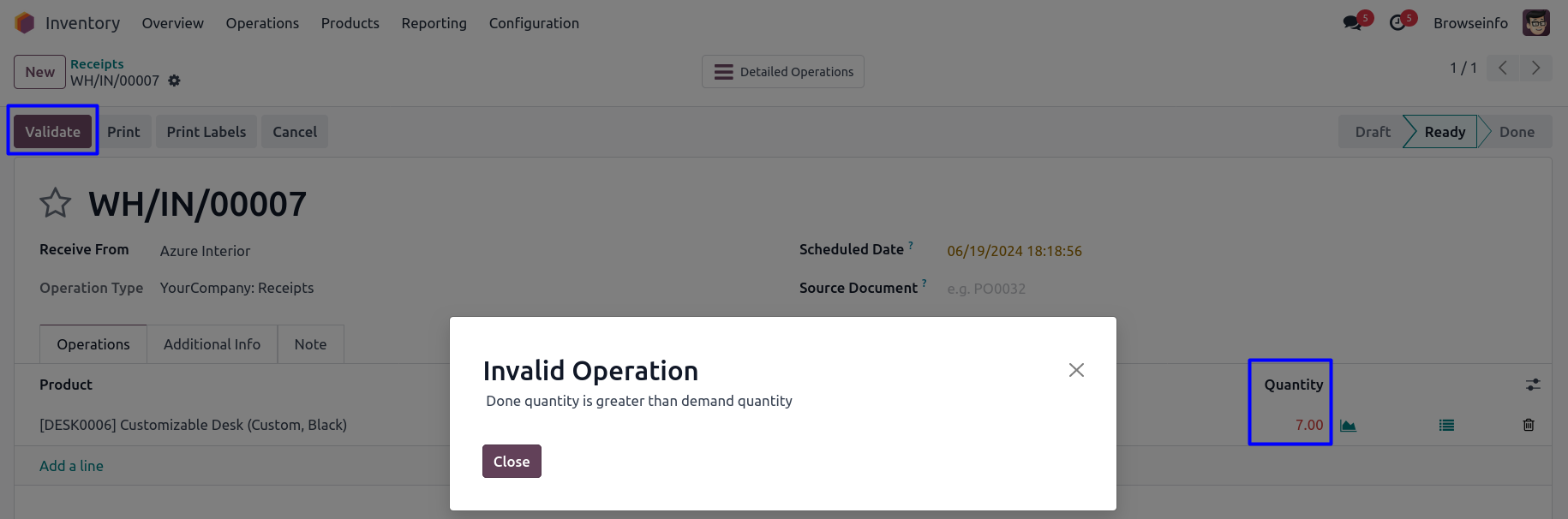
If entered done qty which is greater than demanded qty, Block picking/receipt/delivery/manufacturing and raised validation error.
Also read: Picking/Delivery Order Line Views - List, Form, Pivot, Kanban, Graph View etc
Operation Types/Receipt/Delivery Workflow
Here you can see Operations Types workflow for stock block quanity, It will applied same for Receipt and Delivery Order also.
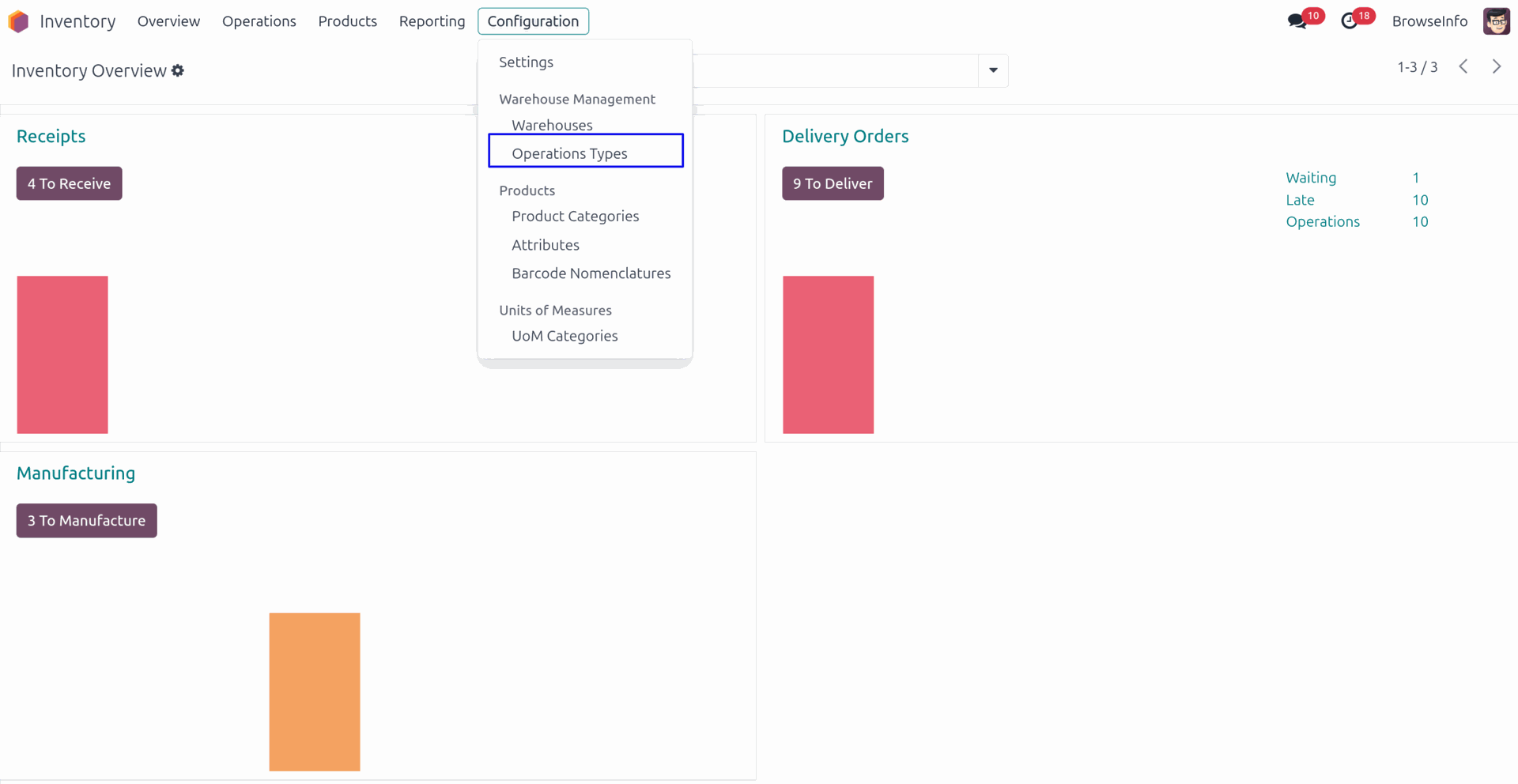
Disable 'Allow stock picking on Exceeded Quantity' Checkbox on Operation Type
Goto Inventory -> Configuration -> Operations Types in that if user disable 'Allow stock picking on Exceeded Quantity' checkbox then it will not allow to validating picking where done qty is greater than demanded qty.
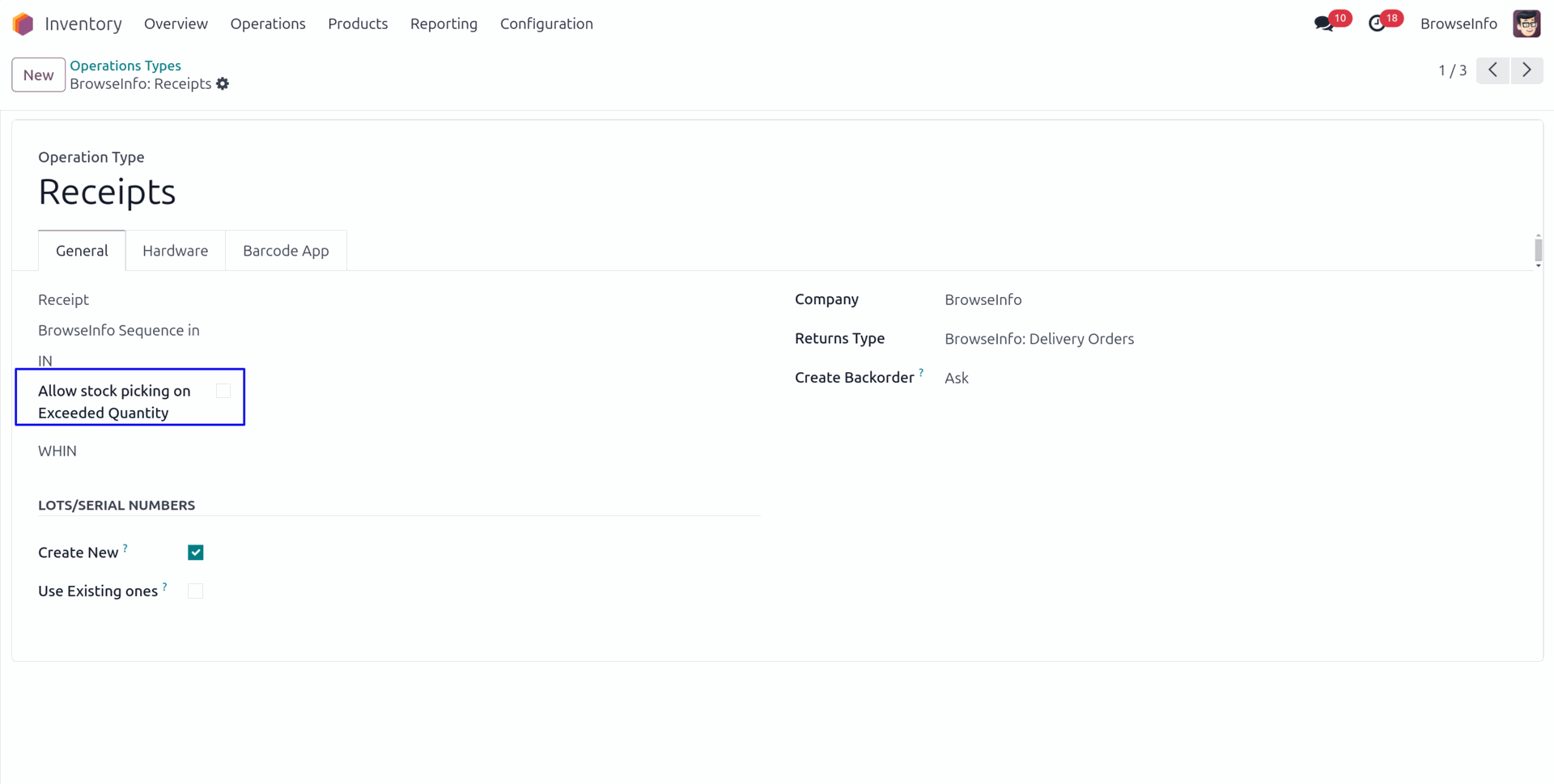
Create Transfer Order
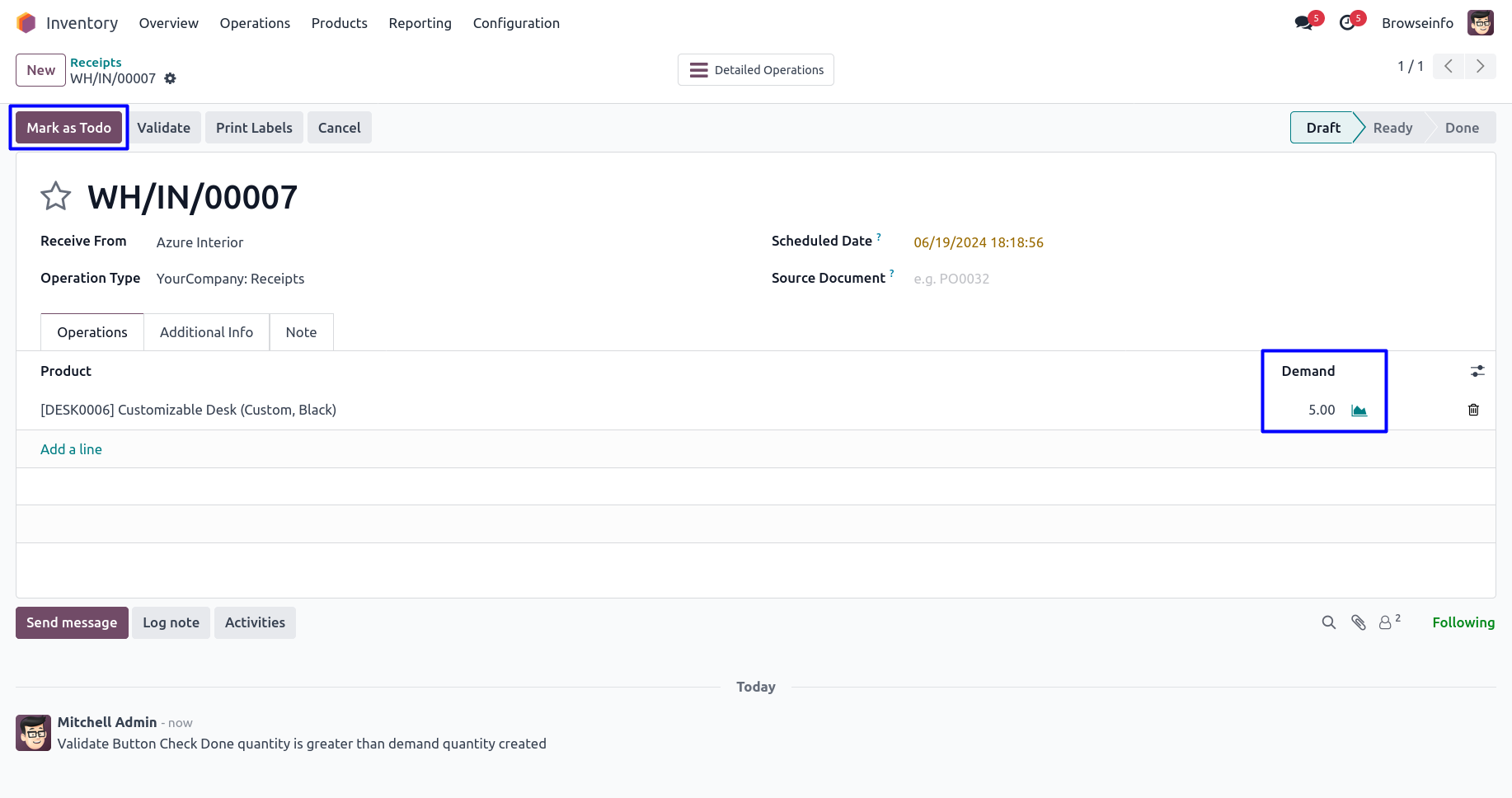
Validate Transfer Order
User can set demanded qty and done qty then hit the 'VALIDATE' button.
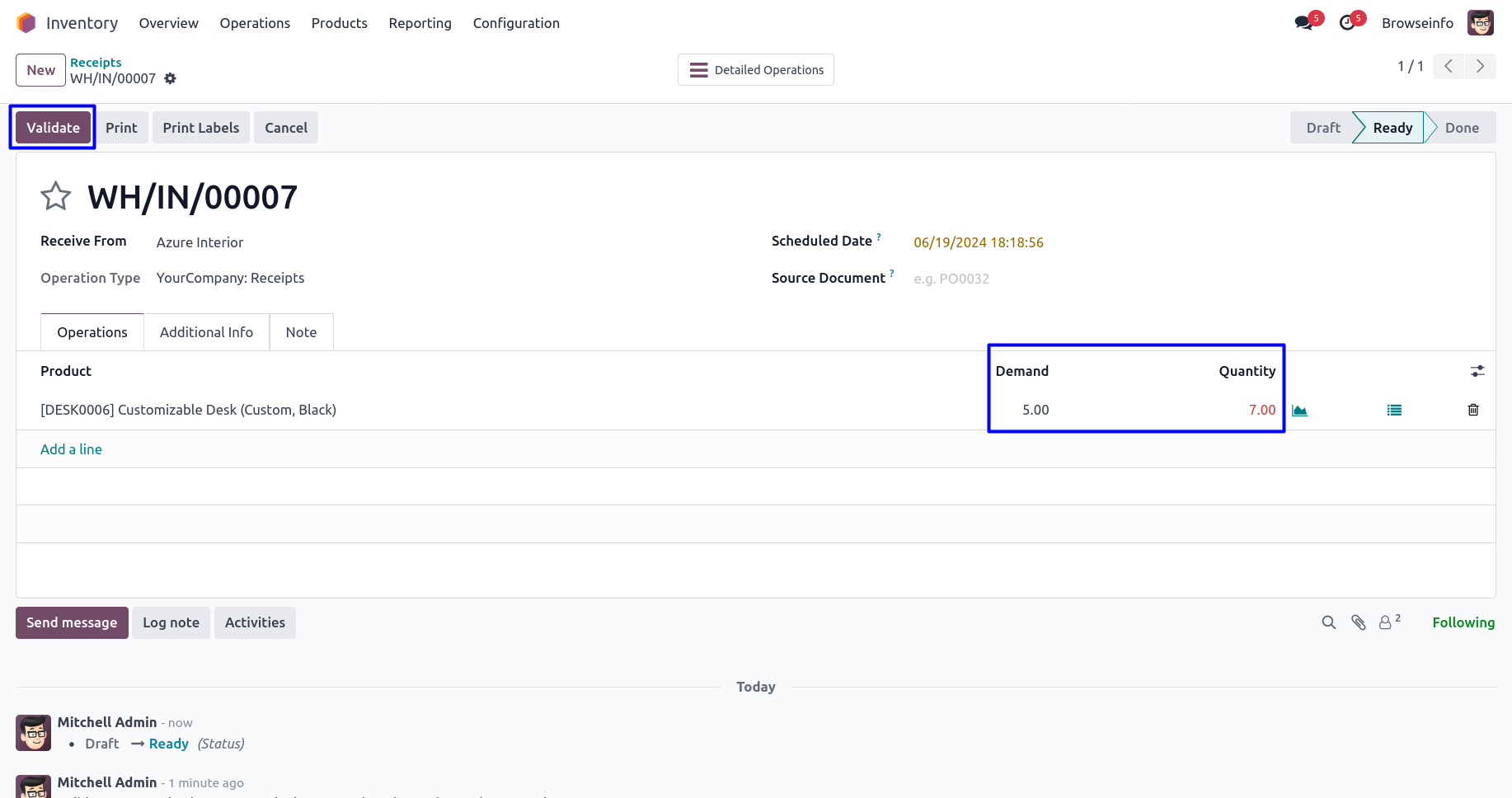
Raised Validation Error
If user enter done qty which is greater than demanded qty, blocked transfer order and raised validation error.
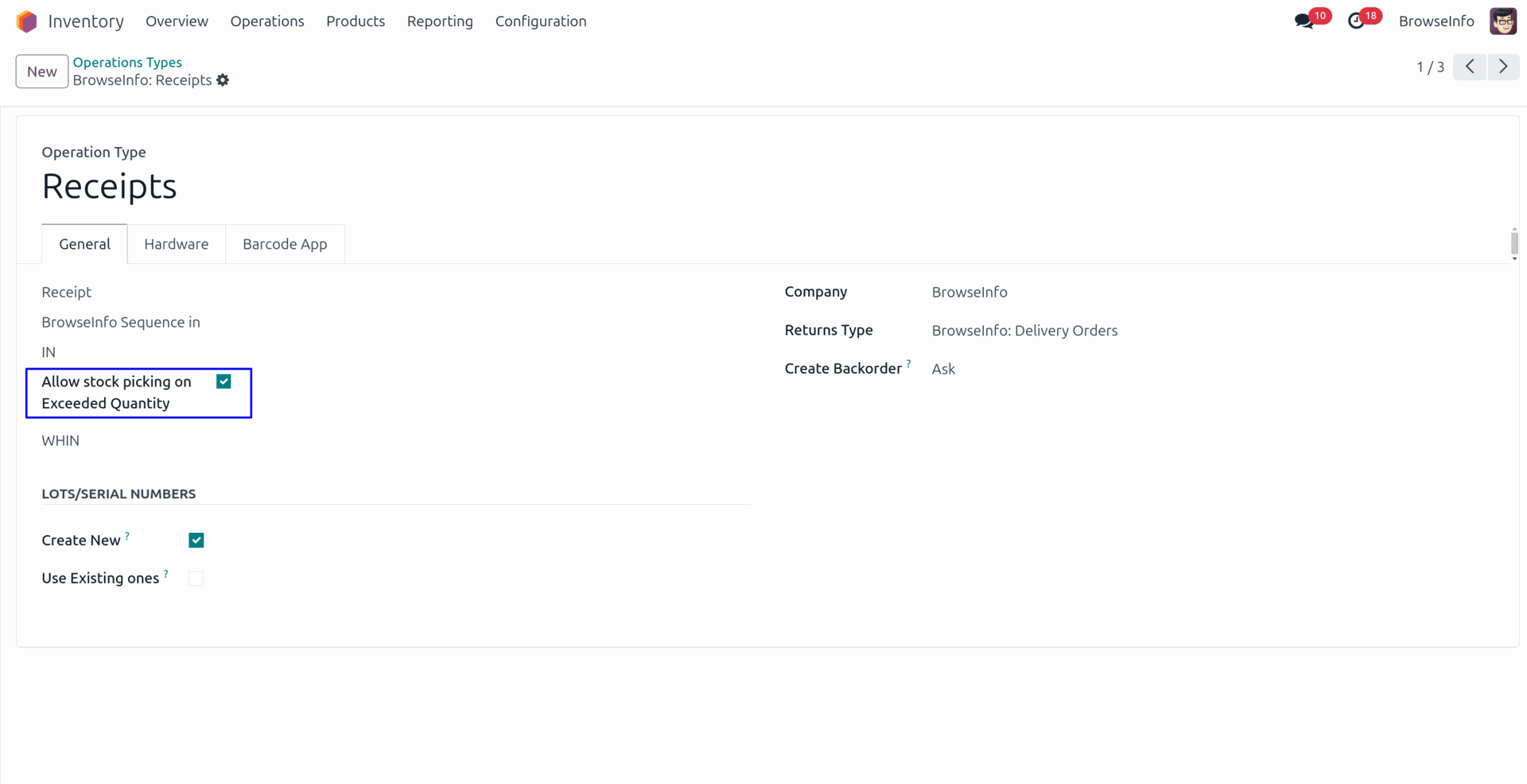
Enable 'Allow stock picking on Exceeded Quantity' Checkbox on Operation Type
If user enable 'Allow stock picking on Exceeded Quantity' checkbox then it will allow to validating picking where done qty is greater than demanded qty.
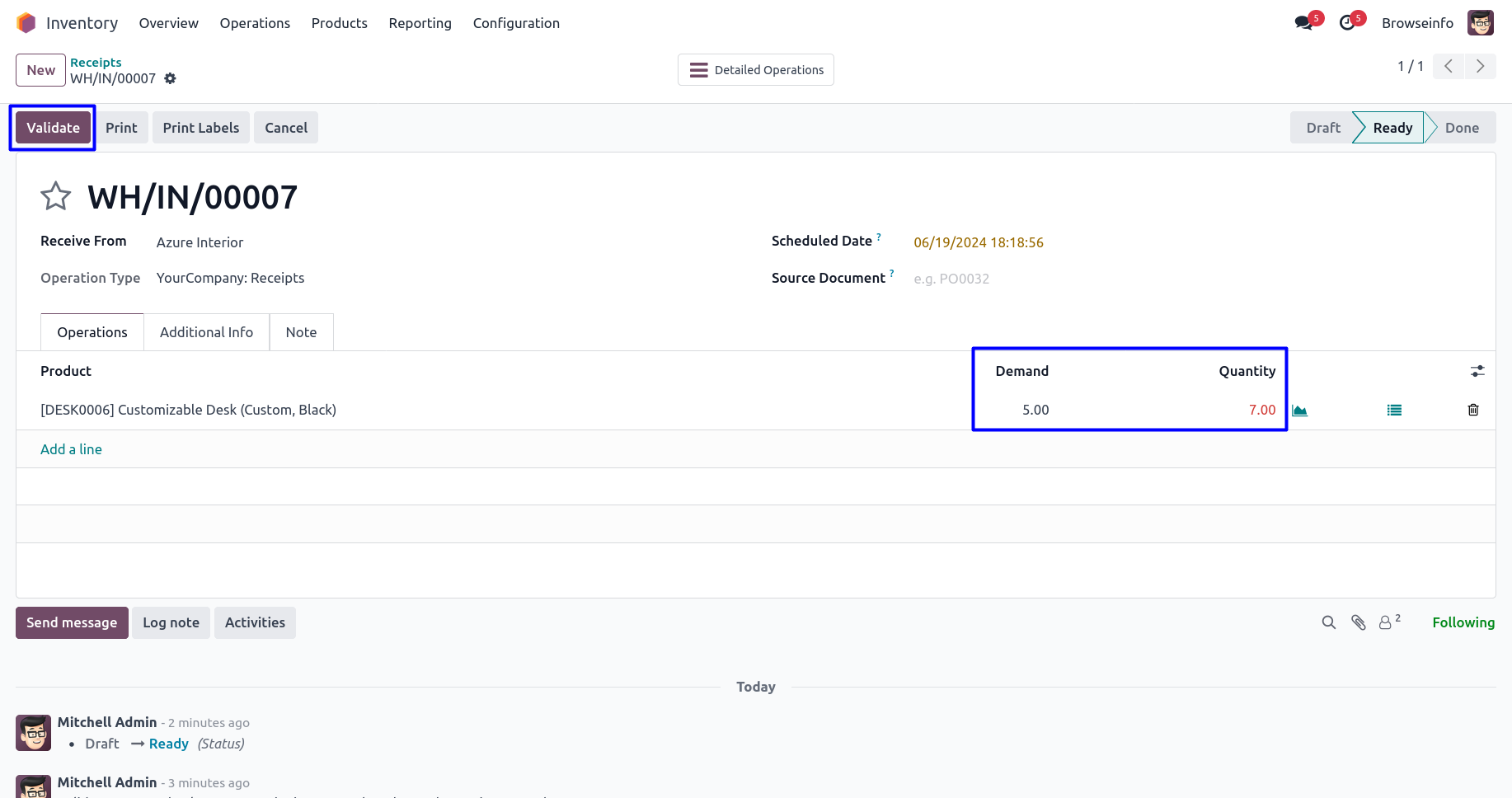
Validate Transfer Order
User can set demanded qty and done qty then hit the 'VALIDATE' button.
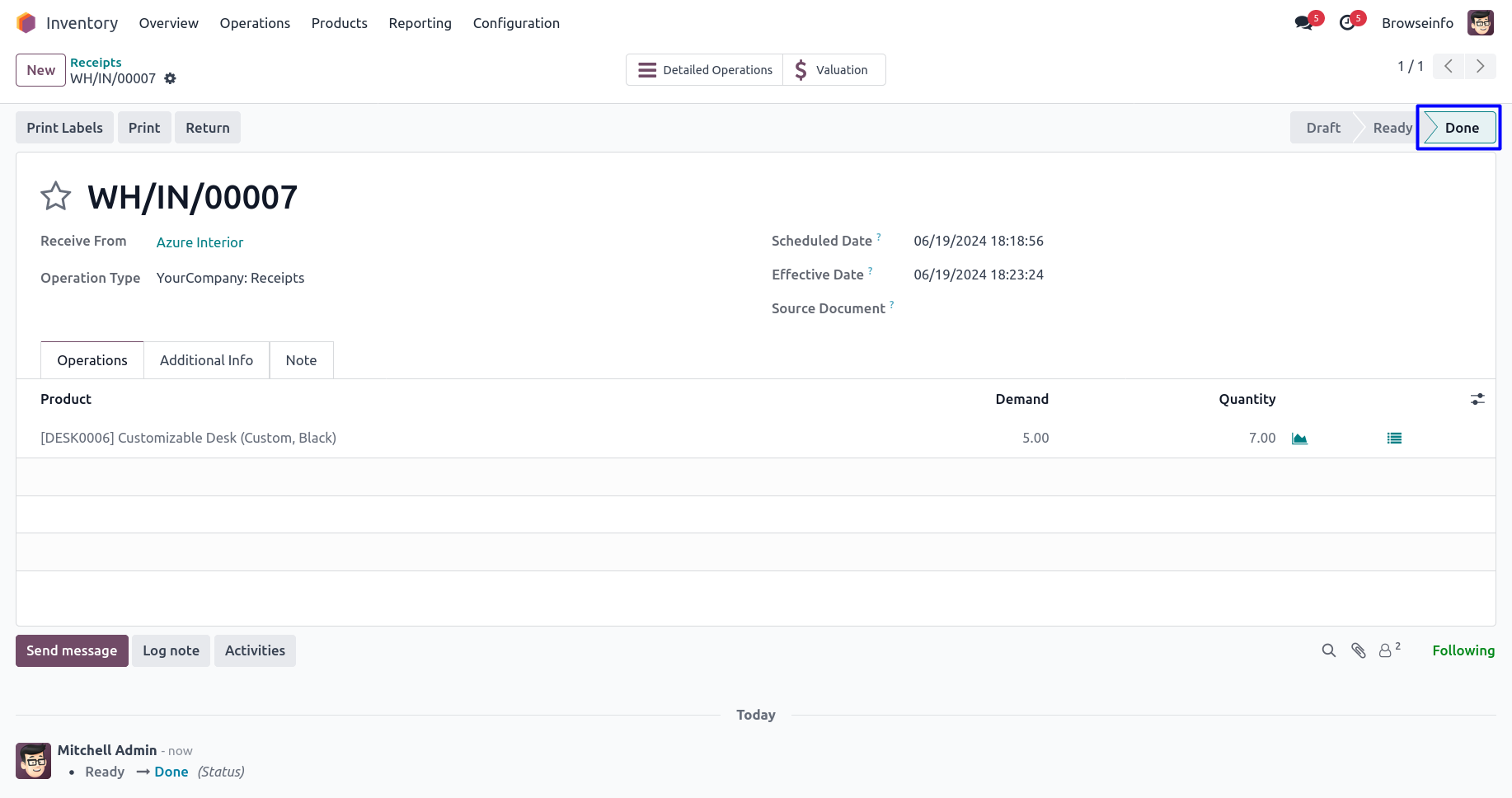
Validated Transfer Order
User can see validated or done picking where done qty is greater than demanded qty.
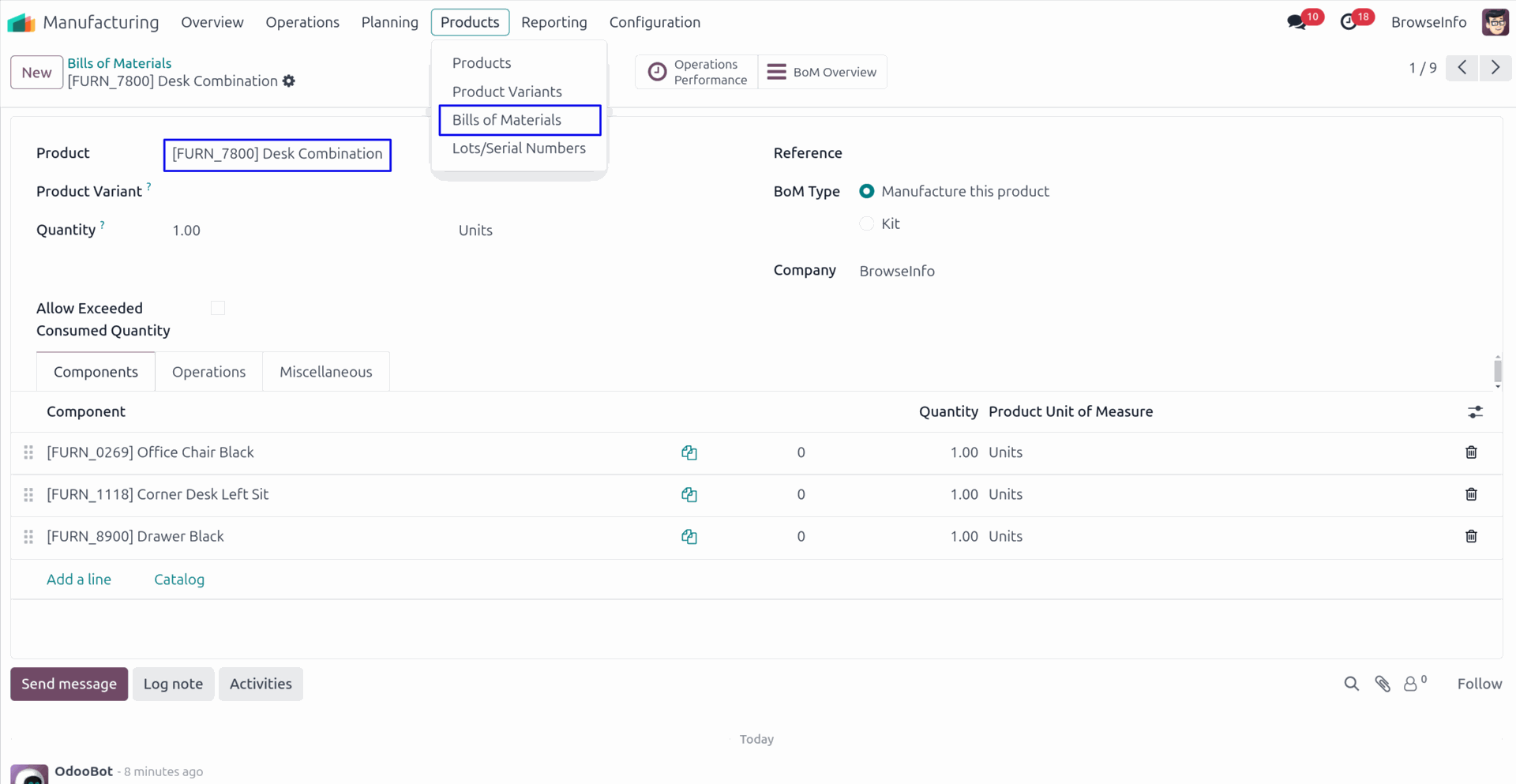
Manufacturing Workflow Disable 'Allow Exceeded Consumed Quantity' Checkbox on Bills of Materials
Goto Manufacturing -> Products -> Bills of Materials in that if user disable 'Allow Exceeded Consumed Quantity' checkbox then it will not allow to validating manufacturing order where consumed qty is greater than to consume qty.
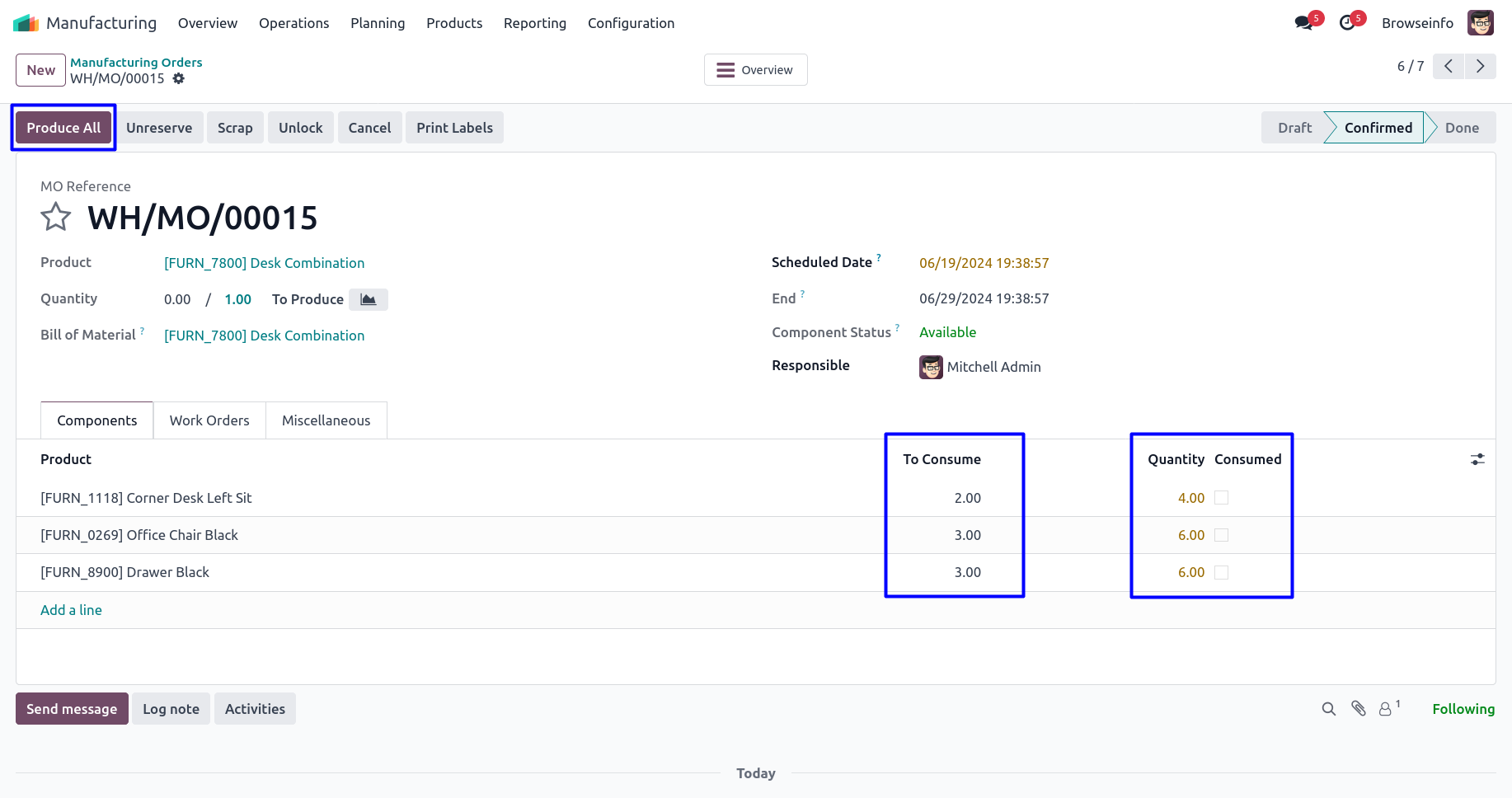
Mark as Done Manufacturing Order
User can set to consume qty and consumed qty then hit the 'MARK AS DONE' button.
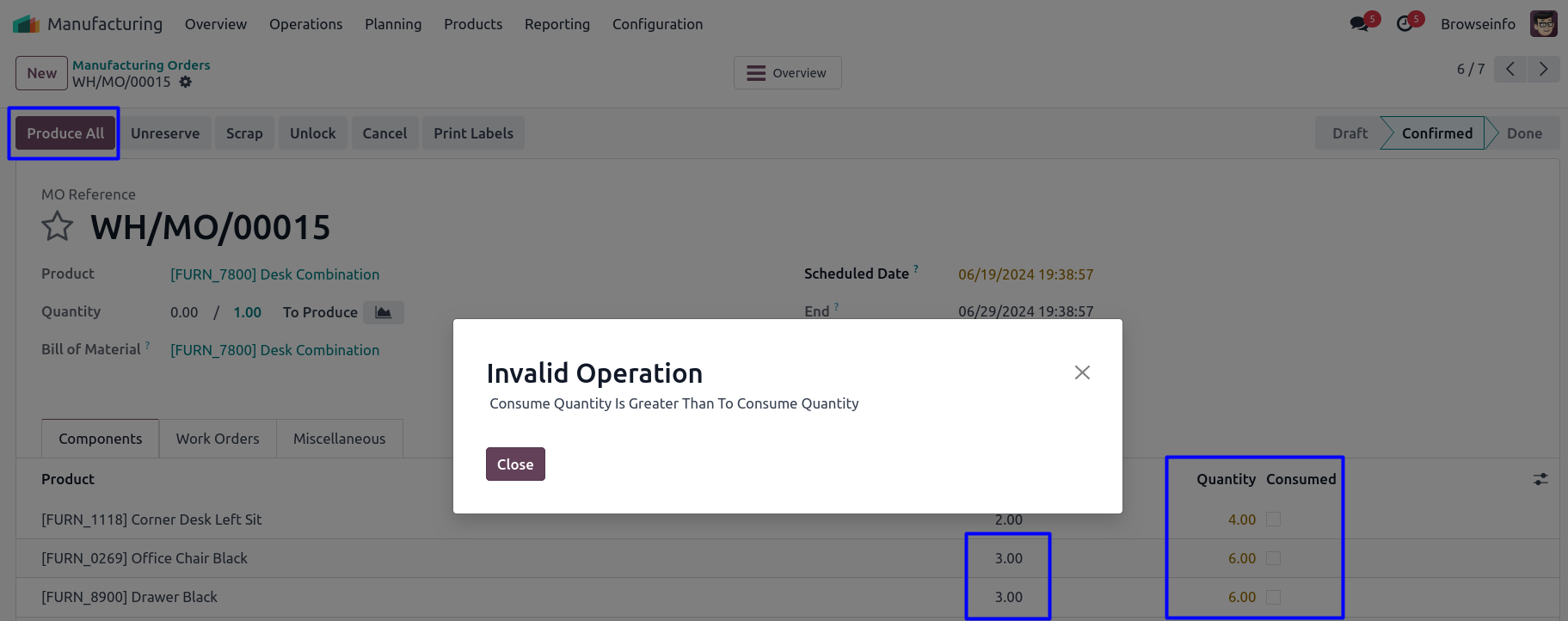
Raised Validation Error
If user enter consumed qty which is greater than to consume qty, blocked manufacturing order and raised validation error.
Benefits of Using Delivery Stock Restriction Compare to Order/Demand Quantity
Implementing quantity control mechanisms within inventory operations offers several business advantages. One of the most significant benefits is the reduction of manual errors during stock processing. Users receive immediate feedback whenever entered quantities exceed the expected values, helping prevent inaccurate stock updates.
The application also improves inventory visibility by ensuring that stock movements remain aligned with original operational plans. This allows managers to trust the inventory data available in Odoo when making purchasing, production, and fulfillment decisions.
Another important advantage is increased process standardization. Organizations can establish consistent rules across receiving operations, internal transfers, deliveries, and manufacturing activities. Since quantity validation is controlled directly through configuration settings, businesses can adapt the behavior based on their operational requirements without changing core workflows.
Ideal Use Cases for This Odoo Application
This application is suitable for a wide range of industries where inventory control is a critical business requirement.
Manufacturing Companies: Prevent excessive raw material consumption beyond planned production quantities and improve production tracking accuracy.
Wholesale Distributors: Ensure warehouse staff process incoming and outgoing stock according to approved quantities, reducing inventory discrepancies.
Retail Businesses: Maintain accurate stock records across multiple locations and prevent unexpected inventory adjustments caused by quantity overruns.
Logistics and Fulfillment Providers: Improve shipment accuracy by validating stock movement quantities before transactions are completed.
Multi-Warehouse Organizations: Apply consistent quantity validation rules across different warehouses and operational teams to maintain data integrity throughout the supply chain.
Flexible Quantity Validation Based on Business Requirements
Different organizations follow different inventory policies. Some businesses require strict controls where exceeding demand quantities should never be allowed, while others may occasionally permit controlled over-processing due to operational necessities.
This module accommodates both scenarios through simple configuration options. Administrators can determine whether quantity overruns should trigger validation errors or be allowed during transaction processing. This flexibility makes the application suitable for businesses of various sizes and operational structures while maintaining full control over inventory transactions.
Conclusion
The Delivery Stock Restriction Compare to Order/Demand Quantity Odoo App provides an effective solution for organizations seeking stronger inventory controls and improved operational accuracy. By validating completed quantities against requested quantities during stock transfers, receipts, deliveries, and manufacturing operations, the application helps prevent inventory inconsistencies before they occur.
With configurable validation rules, real-time error notifications, and support for both inventory and manufacturing workflows, the module enables businesses to maintain accurate stock records, reduce operational mistakes, and improve overall warehouse efficiency. Whether managing a small warehouse or a complex multi-location supply chain, this solution helps ensure that inventory transactions remain aligned with business policies and operational expectations.
