Executive Summary
Customer Relationship Management systems are supposed to help companies build relationships with their customers make more sales and give customers a better experience.. A lot of businesses do things that make it harder for themselves when they keep customer information, sales processes, marketing activities, customer service and financial operations on many different platforms that do not work well together.
As companies get bigger they often have to deal with Customer Relationship Management systems that're all over the place. This means they need to add connections between systems use third-party applications move data around by hand and do the same work twice. At first it might seem like this gives them options but it really just makes things more complicated reduces productivity and makes it harder for the company to see what is going on.
Business leaders are starting to wonder if their current Customer Relationship Management system is really helping them grow in the run or just making things more difficult.
Key business objectives include :
Creating a single source of customer truth
Improving sales and marketing alignment
Eliminating duplicate data entry
Increasing employee productivity
Accelerating customer response times
Improving reporting accuracy
Reducing software and integration costs
Enhancing customer experience consistency
Even though Customer Relationship Management systems that are all over the place can work for individual departments having all the business information in one connected platform is a better way to do things. This way customer information can flow easily throughout the company.
Why CRM Fragmentation Has Become a Growing Business Problem
A lot of companies have collected different software platforms over time.
A typical business environment may include :
CRM software
Marketing automation platforms
Customer support systems
Accounting software
Inventory management tools
Project management applications
eCommerce platforms
Reporting and analytics solutions
Even though each of these solutions might work well on its own the fact that they do not work well together often creates problems.
Common business concerns include :
Customer data spread across multiple systems
Inconsistent reporting and analytics
Sales and support teams working from different records
Growing integration maintenance costs
Delayed decision-making
Poor customer visibility
Increased administrative overhead
Companies are starting to realize that being efficient is not just about having a good Customer Relationship Management system but also, about how well information moves around the company. Customer Relationship Management systems are important. They need to work well with all the other systems that the company uses.
CRM Fragmentation to Unified Business Platform Transformation Diagram

Signs Your CRM Environment Is Reducing Efficiency
Many businesses do not immediately recognize the impact of fragmented systems.
Warning signs often include :
Customer records duplicated across applications
Manual data transfer between systems
Sales teams lacking access to support history
Marketing campaigns using outdated customer information
Slow reporting and dashboard generation
Frequent integration failures
Multiple software subscriptions for similar functions
Over time these issues increase operational costs and reduce organizational agility.
Fragmented CRM vs Unified Business Platform Comparison
| Feature Area | Fragmented CRM Environment | Unified Business Platform |
|---|---|---|
| Customer Data | Multiple Databases | Centralized Database |
| Sales Visibility | Partial | Complete |
| Marketing Integration | Separate Systems | Integrated |
| Customer Service | Disconnected | Connected |
| Reporting | Consolidated Manually | Real-Time |
| Workflow Automation | Cross-System Complexity | Native Automation |
| Data Accuracy | Variable | Consistent |
| Software Costs | Higher | Lower |
| User Experience | Multiple Interfaces | Unified Interface |
| Business Visibility | Limited | End-to-End |
| Scalability | Complex | Simplified |
| Operational Efficiency | Lower | Higher |
Key Insight
The biggest problem with using different CRM systems is that you can't get a complete picture of your customers what they're buying how you're communicating with them and how your business is doing.
When companies use systems that work well together for customer-facing and behind-the-scenes processes they can make decisions faster work together better. Make customers happier.
Hidden Costs of CRM Fragmentation
Many organizations underestimate the long-term costs associated with disconnected systems.
1. Data Synchronization Costs
Maintaining data consistency between applications often requires integrations, middleware and ongoing support resources.
2. Productivity Losses
Employees spend valuable time switching between systems, searching for information and manually updating records.
3. Reporting Challenges
Generating accurate business insights becomes difficult when information exists across multiple platforms.
4. Customer Experience Gaps
Disconnected systems can create inconsistent customer interactions across sales, support, marketing and finance teams.
Operational Risks Created by Disconnected CRM Systems
1. Data Integrity Risk
Multiple systems increase the likelihood of duplicate, outdated, or conflicting customer information.
2. Process Inefficiency Risk
Workflows that span multiple applications often require manual intervention and additional oversight.
3. Scalability Risk
As businesses grow, integration complexity increases and operational management becomes more difficult.
4. Visibility Risk
Executives may struggle to obtain accurate, real-time insights into customer relationships and business performance.
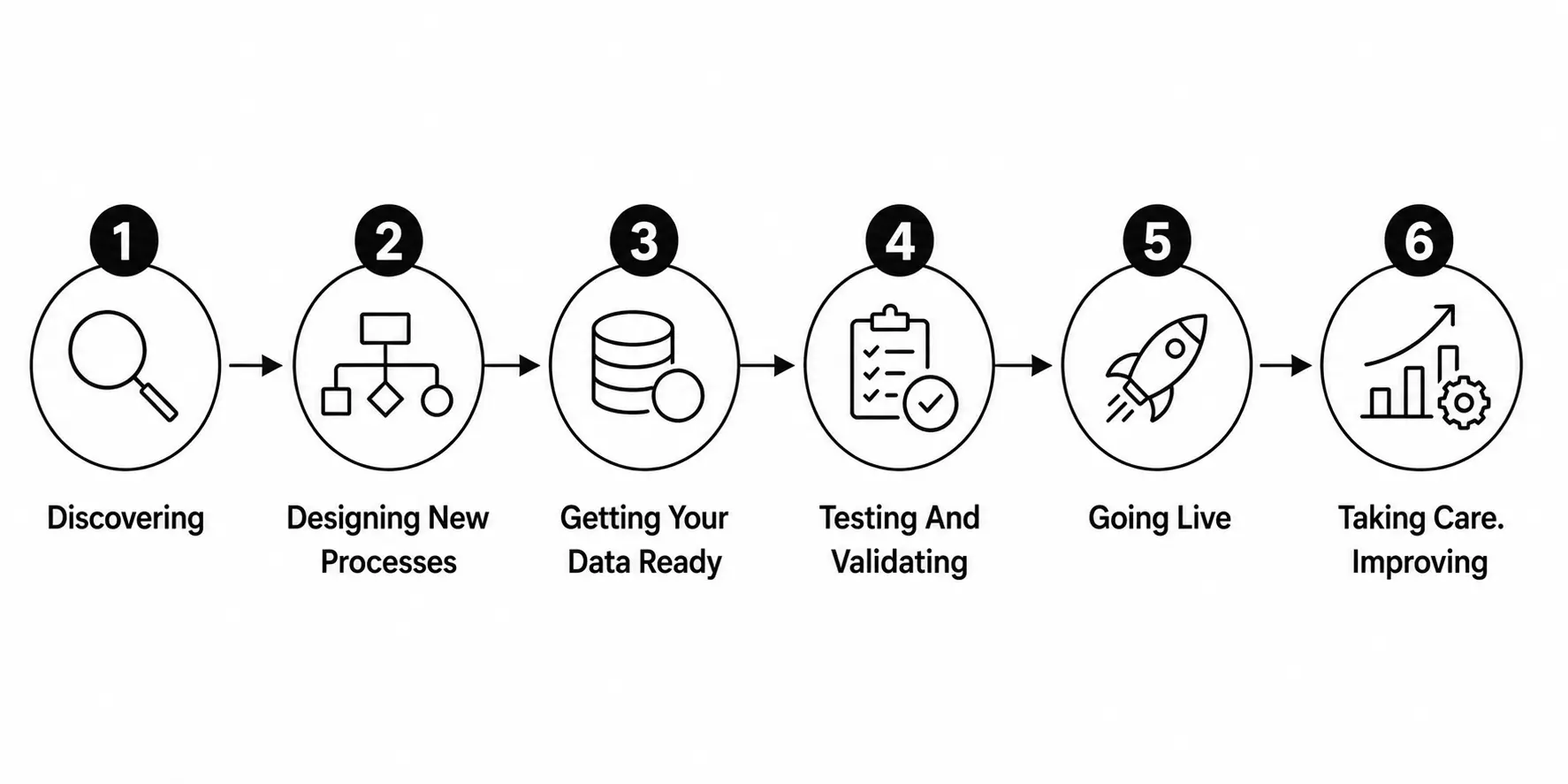
CRM Consolidation Roadmap
Industry-Specific Considerations
| Industry | Fragmentation Challenges | Expected Outcome |
|---|---|---|
| Manufacturing | Sales and production disconnect | Improved visibility |
| Distribution | Inventory and CRM separation | Faster fulfillment |
| Retail | Omnichannel data silos | Better customer experience |
| Professional Services | Project and customer disconnect | Improved profitability |
| eCommerce | Marketing and operations separation | Unified customer journeys |
Cost and ROI Considerations
When thinking about combining CRMs businesses should focus on the results than just the software costs.
Cost Drivers
Multiple software subscriptions
Integration maintenance
Data synchronization
User training
System administration
Custom development
Value Outcomes
Improved customer visibility
Reduced operational costs
Better reporting accuracy
Faster business processes
Increased employee productivity
Enhanced customer experiences
Greater automation
Organizations that get rid of system fragmentation often see improvements in efficiency and decision-making.
Common CRM Consolidation Mistakes
Common challenges include :
Migrating poor-quality data
Retaining unnecessary applications
Ignoring process optimization opportunities
Underestimating user training requirements
Failing to define governance standards
Inadequate testing before deployment
Successful CRM transformations focus on improving business processes not just replacing software.
How BrowseInfo Supports CRM Transformation
BrowseInfo helps businesses combine CRM environments and build connected ecosystems.
Our services include :
Customer journey analysis
Workflow automation
Reporting and dashboard development
User training and adoption programs
Post go-live optimization
Our objective is to help businesses eliminate operational silos, improve customer visibility and create scalable customer engagement platforms.
Frequently Asked Questions
1. What is a fragmented CRM environment?
A fragmented CRM environment occurs when customer information, sales activities, support records, marketing data and operational processes are spread across multiple disconnected systems.
2. Why does CRM fragmentation reduce efficiency?
Employees spend more time searching for information, updating multiple system, and resolving data inconsistencies, reducing overall productivity.
3. What is the biggest hidden cost of fragmented CRM platforms?
Integration maintenance and productivity losses are often the largest hidden costs because they continuously consume internal resources.
4. How does CRM consolidation improve customer experience?
Teams gain access to complete customer information, enabling faster responses, more personalized interactions and better service delivery.
5. Can a unified platform replace multiple CRM-related applications?
Yes. Modern business platforms can combine CRM, marketing, support, accounting, inventory, projects and operational workflows within a single ecosystem.
6. What are the long-term benefits of CRM consolidation?
Benefits include lower operational costs, better reporting, stronger collaboration, improved customer experiences and greater organizational agility.
Final Thoughts
The real downside of CRM platforms is not the software itself but the operational inefficiency that emerges when customer information is isolated.
As businesses grow disconnected applications can create barriers between teams leading to decision-making, inconsistent experiences and rising costs.
Organizations that unify customer and business platforms gain more than simplified technology. They create an ecosystem where customer interactions, business processes and strategic decisions are driven by a single source of truth.
The future of customer relationship management is about connecting every customer interaction to every business process creating a foundation, for growth, excellence and long-term advantage.
