Overview
The way people buy toys has changed a lot over the ten years. People do not just go to stores to buy toys anymore. Today people buy toys from stores from websites from marketplaces from phone apps and from social media platforms.
When you sell toys in different ways it can be good for sales but it can also be very hard to keep track of everything. Toy stores have to keep track of how toys they have what people have ordered what peoples information is, how much toys cost, if there are any sales and how to get toys to people who bought them. They have to do all of this for every way that people can buy toys and make sure that people have an experience.
If toy stores do not have a way to keep track of everything and see what is going on it can get very confusing. This can lead to not having the toys taking a long time to get toys to people and people being unhappy.
The question used to be:
How do we sell toys in different ways?
Now the question is:
How can we make all the different ways we sell toys work together so
that everything runs smoothly we have the right toys we can get toys to
people quickly and people are happy with their experience?
Why Multi-Channel Retailing Is Important for Toy Stores
People who buy toys want to be able to buy them in ways.
Customers want the ability to :
Shop in-store
Purchase online
Browse products through mobile devices
Buy through marketplaces
Order for home delivery
Use click-and-collect services
Check product availability online
Receive consistent pricing and promotions
To make this happen toy stores have to connect all of the places they sell toys into one system.
Signs Your Multi-Channel Operations Need Improvement
Many toy stores have problems when they start selling toys in places.
Common warning signs include:
Inventory mismatches between online and physical stores
Overselling products that are no longer available
Delayed order processing
Inconsistent pricing across channels
Customer complaints about stock availability
Difficulty tracking inventory movements
Manual order management processes
Disconnected customer information
Inaccurate sales reporting
Lack of visibility into channel performance
These problems can make it cost more to run the toy store and make the customers unhappy.
Single-Channel vs Multi-Channel Toy Retail Operations
| Business Area | Single-Channel Operations | Multi-Channel Operations |
|---|---|---|
| Sales Channels | Physical Store Only | Store, Website, Marketplace, Mobile |
| Inventory Visibility | Localized | Centralized |
| Customer Experience | Limited Touchpoints | Multiple Touchpoints |
| Order Fulfillment | Store-Based | Multiple Fulfillment Options |
| Customer Data | Fragmented | Unified Profiles |
| Marketing Reach | Local Audience | Broader Market Reach |
| Revenue Opportunities | Limited | Expanded Sales Potential |
| Reporting | Basic | Comprehensive Analytics |
| Inventory Management | Simpler | More Complex |
| Business Growth | Slower | Scalable |
Key Insight
The big problem is not managing each channel one by one.
The big problem is making sure all channels have the information about inventory and customers at the same time.
Common Challenges in Multi-Channel Toy Store Management
When you have many sales channels it can get very complicated to manage everything.
Common challenges include :
Inventory synchronization
Order management
Pricing consistency
Customer data management
Channel-specific promotions
Warehouse coordination
Inventory forecasting
Returns management
Reporting consolidation
Customer service consistency
Without centralized systems, these challenges often create inefficiencies throughout the business.
Complete Toy Store Management
Related Resource: Toy Store Management with Odoo ERP
There are systems that can help toy stores manage inventory, sales and customer relationships across channels from one place.
Learn more about toy store management solutions here:
This solution helps toy stores make their operations simpler by connecting inventory management sales channels and workflows and by giving them a view of their business in real time.
Major Challenges of Managing Multi-Channel Toy Store Operations
1. Making Sure Inventory is the Same Across All Channels
One of the problems in selling things through many channels is making sure you know how much inventory you have.
Common issues include :
Overselling products
Stock discrepancies
Delayed inventory updates
Duplicate inventory allocations
If you can see your inventory in real time you can make sure you have the right information about your stock across all channels.
2. Managing Orders from Different Places
Orders can come from :
Physical stores
Online stores
Marketplaces
Mobile applications
Social commerce platforms
If you manage orders separately it can cause delays and make things more complicated.
Centralized order management improves fulfillment speed and accuracy.
3. Giving Customers the Same Experience
Customers want to have the same experience no matter where they shop.
Challenges include :
Inconsistent promotions
Different pricing structures
Fragmented customer records
Disconnected loyalty programs
If you manage customer information from one place you can make sure customers have the experience across all channels.
4. Managing Seasonal Demand Across Channels
The toy industry experiences significant seasonal demand fluctuations.
During peak periods, retailers must manage :
Increased order volumes
Higher inventory requirements
Multiple fulfillment channels
Supplier coordination
It is more important to be able to predict what you will need during these times.
5. Reporting and Business Visibility
Stores often have trouble combining information from all their sales channels.
Challenges include :
Separate reporting systems
Delayed performance insights
Inconsistent data
Limited visibility into profitability
If you can see all your information from one place you can make decisions faster and more accurately.
6. Returns and Reverse Logistics
Selling through channels can make returns more complicated.
Stores may need to handle :
Online returns
Store returns
Marketplace returns
Exchange requests
If you have a system that connects everything you can make returns simpler. Make customers happier.
Benefits of Integrated Multi-Channel Operations

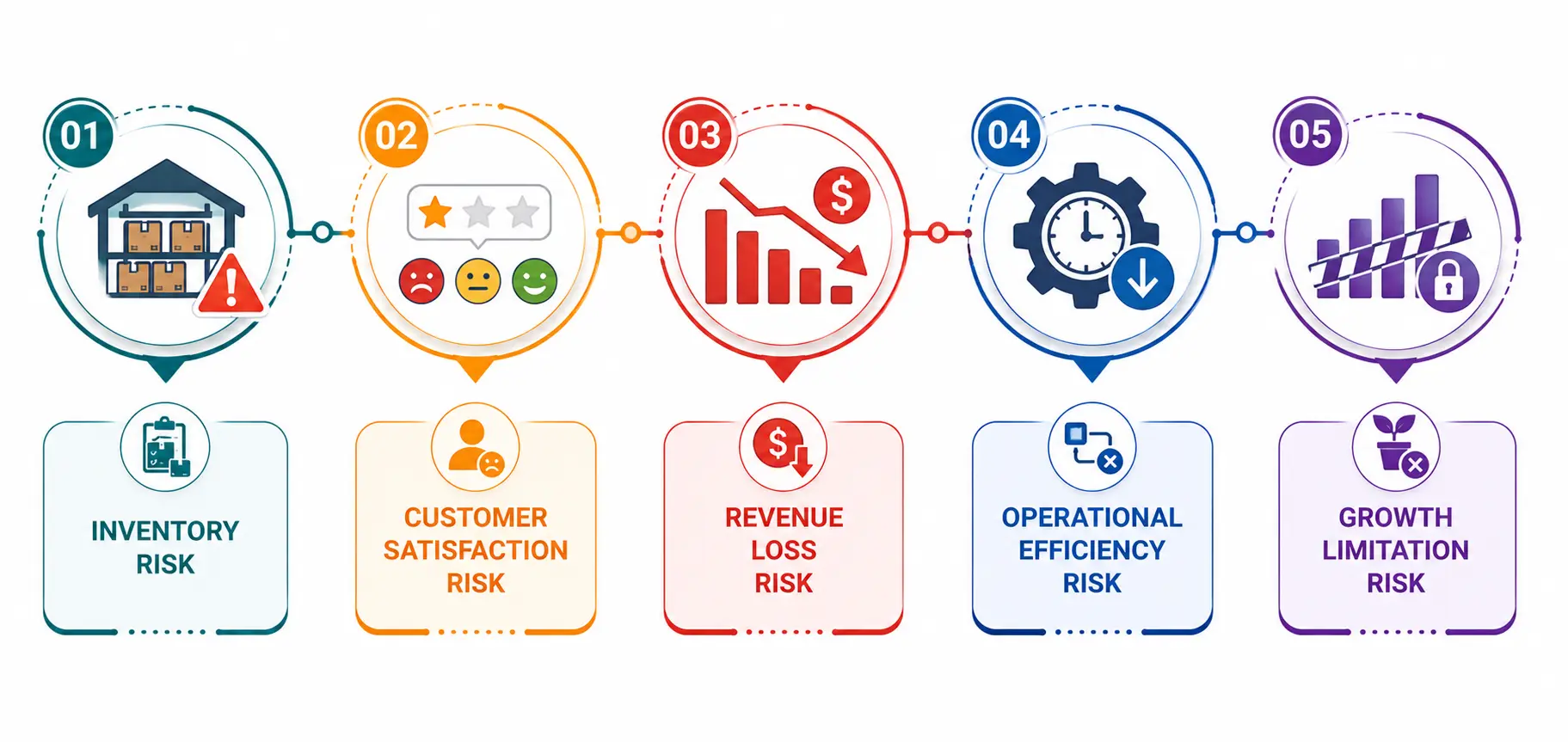
Risks of Poor Multi-Channel Management
Key Metrics Multi-Channel Toy Retailers Should Track
| Metric | Business Benefit |
|---|---|
| Inventory Accuracy | Improves stock reliability |
| Order Fulfillment Rate | Measures operational efficiency |
| Channel Revenue | Evaluates channel performance |
| Customer Retention Rate | Tracks customer loyalty |
| Inventory Turnover | Measures inventory efficiency |
| Stockout Rate | Identifies inventory issues |
| Average Order Value | Measures sales effectiveness |
| Return Rate | Evaluates customer satisfaction |
These metrics help retailers optimize both inventory and sales performance.
Common Multi-Channel Retail Mistakes
Many toy stores make mistakes that can be avoided.
Common mistakes include :
Managing inventory separately by channel
Using disconnected software systems
Delayed inventory synchronization
Inconsistent pricing strategies
Poor customer data management
Limited forecasting capabilities
Manual order processing
Inadequate reporting and analytics
Successful stores focus on connecting everything automating tasks and having a clear view of their business.
How BrowseInfo Helps Toy Retailers Manage Multi-Channel Operations
BrowseInfo helps toy stores make their operations simpler by using a system that connects everything.
Our services include :
Toy store ERP implementation
Multi-channel inventory management
eCommerce integration
POS integration
Marketplace connectivity
Automated order processing
Inventory forecasting
Accounting integration
Reporting and analytics
Staff training and support
The goal is to help toy stores be more efficient have inventory make customers happy and grow their business in a sustainable way.
FAQs
1. What is multi-channel toy retailing?
Multi-channel retailing is selling toys through channels like physical stores, websites, marketplaces, mobile apps and social media.
2. Why is it important to have the inventory information across all channels?
It helps you know you have the right stock and prevents you from selling something you do not have.
3. What are the biggest challenges of managing channels?
Some of the biggest challenges are managing inventory filling orders giving customers the same experience, reporting and connecting all channels.
4. How can toy stores make their multi-channel operations more efficient?
By using a system that connects inventory, sales, customer information and reporting across all channels.
5. Can a system that connects everything help manage -channel toy retail operations?
Yes it can help you manage inventory orders, customers, accounting and sales channels from one place.
6. How does selling through channels help business growth?
It helps you reach customers make it easier for customers to shop increase sales opportunities and grow your business in a sustainable way.
Final Thoughts
Selling through channels is important for toy stores that want to stay competitive.
Customers want to have the experience across physical stores, websites, marketplaces and mobile channels so it is more important than ever to connect all your operations.
The successful toy stores use a system that connects inventory, sales, customer information and reporting into one place. By doing this they can be more accurate with their inventory make customers happy and grow their business in a way.
Selling through channels is not just about selling through more places. It is, about creating a connected business that gives customers the same experience and gives you a clear view of your business in real time.
