Overview
Purchasing plays a critical role in every business. Whether a company manufactures products, manages inventory, operates retail stores or delivers services the procurement process directly impacts operational efficiency, inventory availability, supplier relationships and profitability. Poor purchasing practices can lead to stock shortages, delayed production, higher procurement costs and inefficient cash flow management.
Many small businesses manage buying things through spreadsheets, emails and manual approvals at first. This can work for a while but it gets hard to handle as more suppliers are added and more things are bought. Teams have trouble seeing what is being bought how suppliers are doing, when shipments arrive and how much buying things costs.
Odoo Purchase Management helps businesses control and automate buying operations using one integrated system. From handling suppliers and requests to buy things, making purchase orders, getting approvals, updating stock and paying suppliers Odoo gives visibility into buying. This guide explains how Odoo Purchase Management works, its main features, benefits and best practices to improve buying efficiency.
Why Purchase Management Matters
Procurement is more than making purchase orders. It is about choosing suppliers, talking about prices, handling contracts, checking deliveries, keeping costs under control and making sure materials are available when we need them.
Inefficient purchasing processes often create operational problems throughout the organization. Inventory shortages can delay sales and production activities, while excess purchasing can increase storage costs and tie up working capital. Without proper visibility, businesses may also struggle to monitor supplier performance and control procurement spending.
A good purchase management system helps organizations to make the most of procurement have relationships, with suppliers and make smarter purchasing decisions. It helps with procurement, supplier relationships and purchasing decisions.
What Is Odoo Purchase Management?
Odoo Purchase Management is a comprehensive procurement solution designed to help businesses manage purchasing activities from supplier selection to vendor payments.
The module integrates directly with:
- Inventory Management
- Sales
- Manufacturing
- Accounting
- Vendor Management
- Supply Chain Operations
Because all procurement activities are connected within a single platform, businesses gain real-time visibility into purchasing requirements, stock levels, supplier performance and procurement costs.
This integration reduces manual work and improves operational coordination across departments.
Core Features of Odoo Purchase Management
Purchase Order Management
Purchase orders form the foundation of procurement operations. Odoo allows businesses to create, approve, track and manage purchase orders from a centralized system.
Purchasing teams can monitor order status, supplier commitments, delivery schedules and procurement costs without relying on spreadsheets or email chains. This improves accountability and reduces purchasing delays.
The system also maintains a complete history of procurement activities helping organizations improve purchasing decisions over time.

Vendor Management
Strong supplier relationships are essential for reliable procurement operations.
Odoo enables businesses to maintain detailed supplier information, including contact details, pricing agreements, product catalogs, delivery terms and purchasing history. Procurement teams can evaluate suppliers based on performance and make more informed sourcing decisions.
Better vendor visibility often leads to improved negotiation outcomes and stronger supplier relationships.

Request for Quotation Management
Before creating a purchase order organizations often need to compare supplier pricing and terms.
Odoo supports Request for Quotation workflows that allow businesses to request pricing from multiple vendors and evaluate responses efficiently. This process helps organizations secure competitive pricing while improving procurement transparency.
RFQ management is particularly useful for businesses with high purchasing volumes or complex sourcing requirements.

Odoo Purchase Management Features and Benefits
| Feature | Business Benefit |
|---|---|
| Purchase Orders | Streamlined procurement process |
| Vendor Management | Improved supplier relationships |
| RFQ Management | Better supplier comparison |
| Automated Replenishment | Reduced stock shortages |
| Purchase Approvals | Improved purchasing control |
| Vendor Pricelists | Better cost management |
| Inventory Integration | Accurate stock planning |
| Procurement Reporting | Better decision-making |
Purchase Approvals and Procurement Control
As businesses grow purchasing decisions often require additional oversight.
Odoo helps businesses set up approval workflow based on buying rules, order costs, departments or supplier types. Automated approval steps make sure everything follows the rules and speeds up the process by getting rid of manual approvals.
Approval controls are particularly valuable for organizations seeking to improve spending visibility and reduce procurement risks.
Automated Replenishment and Procurement Planning
One of the biggest challenges in procurement is ensuring inventory availability without overstocking.
Odoo helps businesses automate replenishment activities based on inventory levels, demand forecasts, and predefined procurement rules. When stock reaches specified thresholds the system can generate procurement recommendations or purchase requests automatically.
This capability helps businesses:
- Prevent stock shortages
- Reduce excess inventory
- Improve cash flow management
- Optimize purchasing schedules
Automation significantly reduces the administrative effort required for inventory planning.
Integration with Inventory Management
Purchasing and inventory management are closely connected. Procurement teams need visibility into stock levels to make informed purchasing decisions.
Odoo integrates purchasing and inventory operations, allowing procurement teams to monitor inventory availability, incoming shipments, reserved stock and replenishment requirements in real time.
When purchase orders are received, inventory records are updated automatically. This integration improves inventory accuracy and helps businesses maintain better operational control.
Multi-Company and Multi-Warehouse Procurement
Organizations operating multiple companies or warehouse locations often face additional procurement complexity.
Odoo supports centralized purchasing while providing visibility into procurement activities across different business units and warehouse locations. Procurement managers can coordinate sourcing activities, optimize purchasing volumes, and improve supplier negotiations.
This functionality is particularly valuable for businesses with geographically distributed operations.
Vendor Pricelists and Cost Optimization
Managing supplier prices on your own can get really tough when you have a lot of products and work with vendors.
Odoo allows businesses to maintain vendor-specific pricelists, helping procurement teams compare supplier costs and select the most cost-effective sourcing options. Historical purchasing information also helps identify pricing trends and negotiation opportunities.

When you can see all the costs clearly you can make decisions, about what to buy and that helps your company make more money.
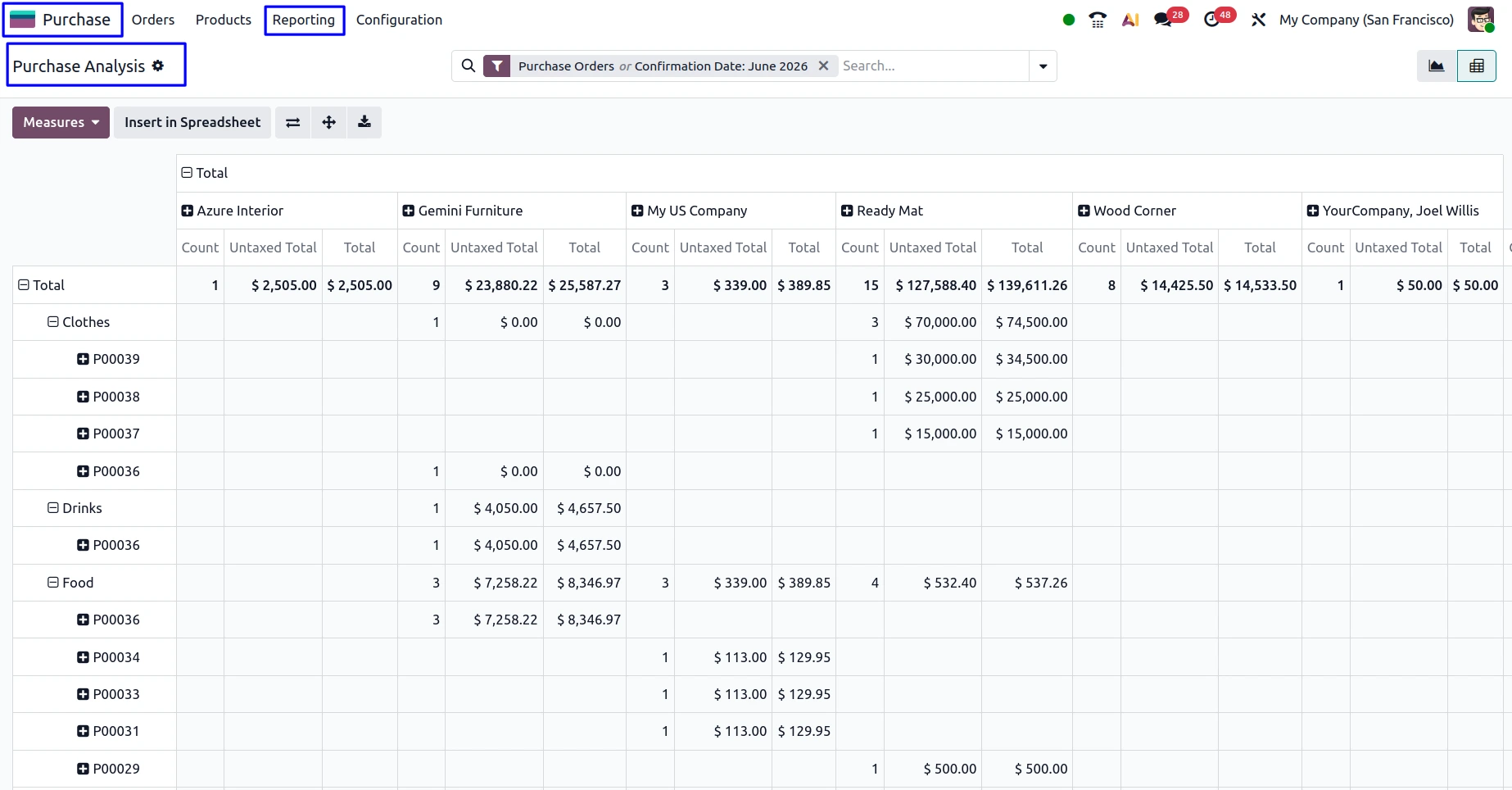
Procurement Reporting and Analytics
Effective procurement management requires access to accurate data.
Odoo provides reporting tools that help businesses analyze:
- Purchase spending
- Supplier performance
- Procurement trends
- Delivery reliability
- Purchase order status
- Cost comparisons
These insights enable procurement leaders to identify inefficiencies, improve supplier relationships, and optimize purchasing strategies. Accurate reporting also supports strategic planning and budgeting activities.
Common Procurement Challenges and Odoo Solutions
| Procurement Challenge | Odoo Solution |
|---|---|
| Manual Purchasing Processes | Automated procurement workflows |
| Stock Shortages | Replenishment automation |
| Supplier Visibility Issues | Vendor management tools |
| Approval Delays | Automated approval workflows |
| Pricing Inconsistencies | Vendor pricelists |
| Inventory Planning Challenges | Inventory integration |
| Procurement Reporting Gaps | Real-time dashboards |
| Multi-Location Complexity | Centralized purchasing management |
Best Practices for Odoo Purchase Management
Technology alone cannot solve procurement challenges. Businesses should establish clear purchasing policies, maintain accurate supplier information, and regularly review procurement performance.
Organizations can maximize value from Odoo by:
- Standardizing procurement workflows
- Monitoring supplier performance regularly
- Maintaining updated vendor records
- Automating replenishment where appropriate
- Reviewing procurement KPIs frequently
Combining strong procurement processes with Odoo's capabilities leads to better operational outcomes.
Common Purchasing Mistakes to Avoid
Many procurement inefficiencies stem from process issues rather than software limitations.
Common mistakes include:
- Relying on manual approvals
- Maintaining incomplete supplier records
- Ignoring supplier performance metrics
- Over-purchasing inventory
- Failing to monitor procurement costs
Addressing these issues helps businesses improve purchasing efficiency and reduce operational risks.
How Odoo Purchase Management Supports Business Growth
When businesses get bigger buying things and managing suppliers gets more complicated. There are suppliers, products and warehouses to deal with which means more work for the team and a higher chance of mistakes.
Odoo provides a scalable procurement platform that grows alongside the organization. Automated workflows, integrated inventory visibility, supplier management tools, and real-time reporting help businesses maintain control as operations expand.
This scalability makes Odoo Purchase Management a valuable solution for organizations seeking long-term procurement efficiency and operational excellence.
Frequently Asked Questions
1. What is Odoo Purchase Management?
Odoo Purchase Management is a procurement solution that helps businesses manage suppliers, purchase orders, RFQs, approvals and purchasing workflows.
2. Can Odoo automate purchase orders?
Yes. Odoo can generate procurement recommendations and automate purchasing activities based on inventory levels and replenishment rules.
3. Does Odoo support vendor management?
Yes. Odoo allows businesses to maintain supplier records, pricing information, purchasing history and performance data.
4. How does Odoo help reduce stock shortages?
Odoo integrates purchasing with inventory management and supports automated replenishment workflows.
5. Can Odoo manage multi-company procurement?
Yes. Odoo supports procurement operations across multiple companies and warehouse locations.
Conclusion
Odoo Purchase Management helps businesses streamline procurement processes, improve supplier coordination, and gain better control over purchasing activities. By integrating procurement with inventory, manufacturing and accounting organizations can improve visibility, reduce costs and make more informed purchasing decisions.
With automation real-time reporting and centralized procurement management, Odoo enables businesses to build an efficient and scalable purchasing framework that supports long-term growth and operational success.
